Alabama Graduation Rates: Nine RecordsET · 2023 Crash · BirminghamET · Foster CareET · CCR GapET
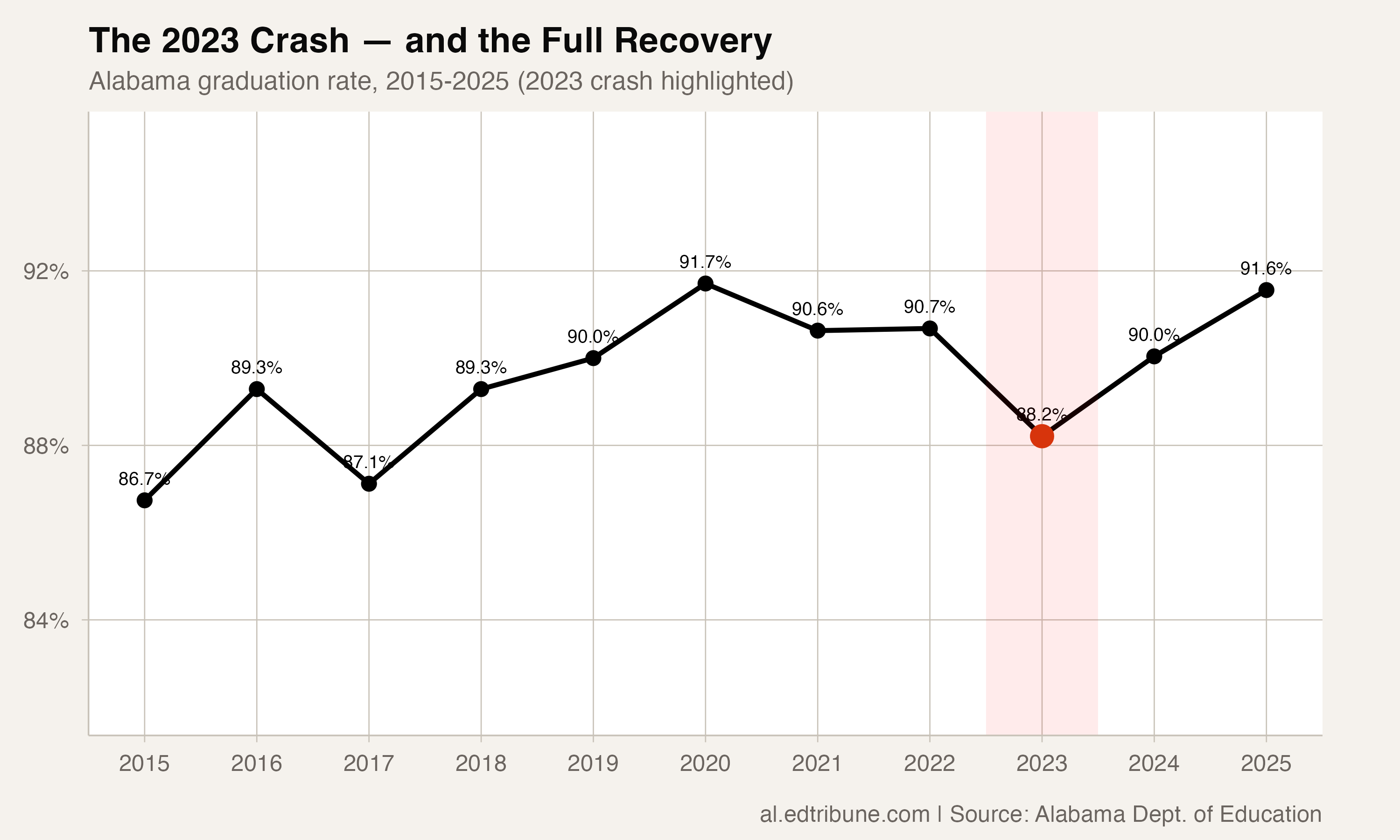
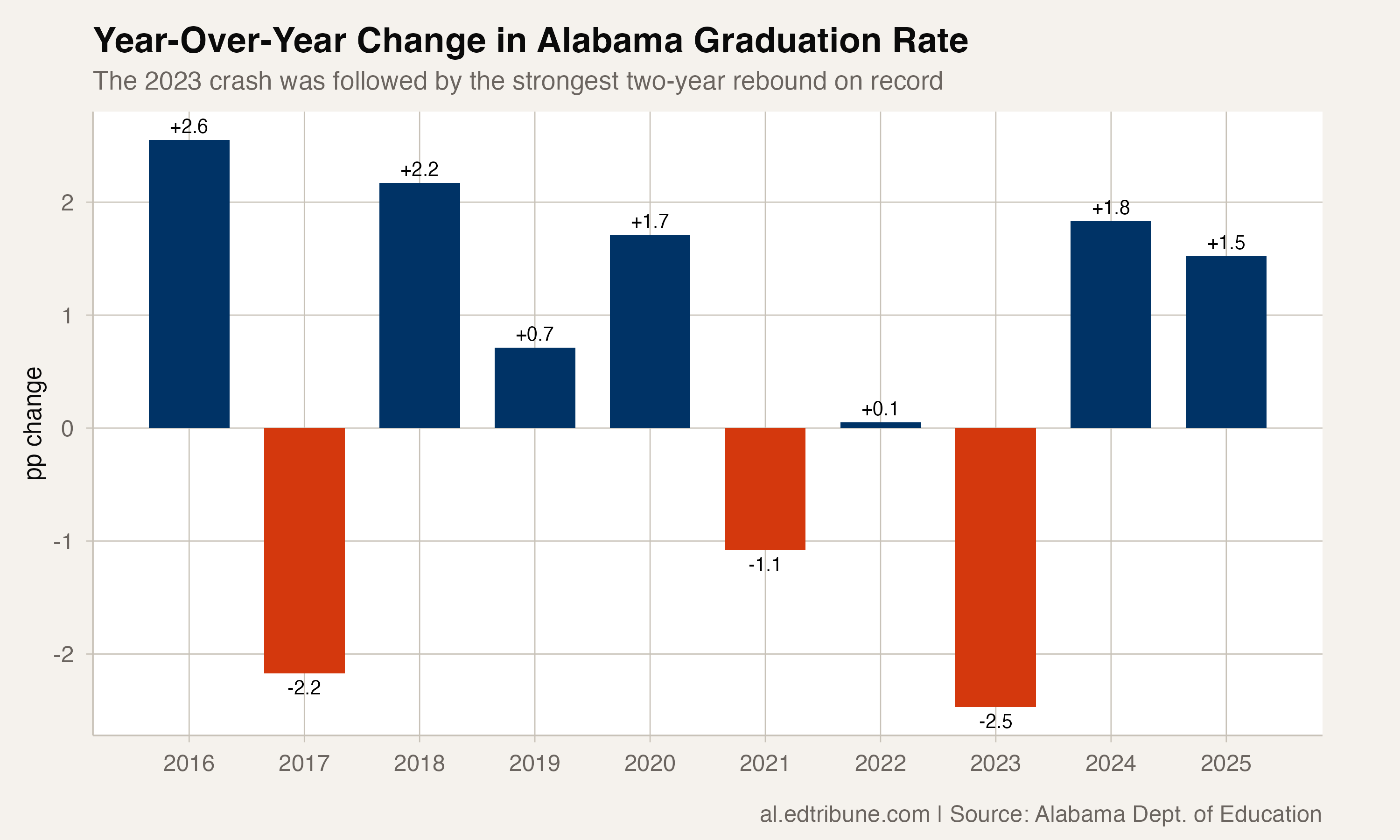
Alabama's statewide graduation rate dropped 2.47 percentage points in 2023, from 90.68 percent to 88.21 percent, the largest single-year decline in at least a decade of data. Every subgroup declined except special education. The crash was not a data error or a methodology change. It was the correction that happens when temporary supports get pulled.
Two years later, the state has fully recovered. The 2025 rate of 91.56 percent is the second-highest on record. But the 2023 episode reveals something important about the three preceding years: how much of the elevated 2020-2022 rates was real, and how much was inflated by policies that could not last.
Who was hit hardest
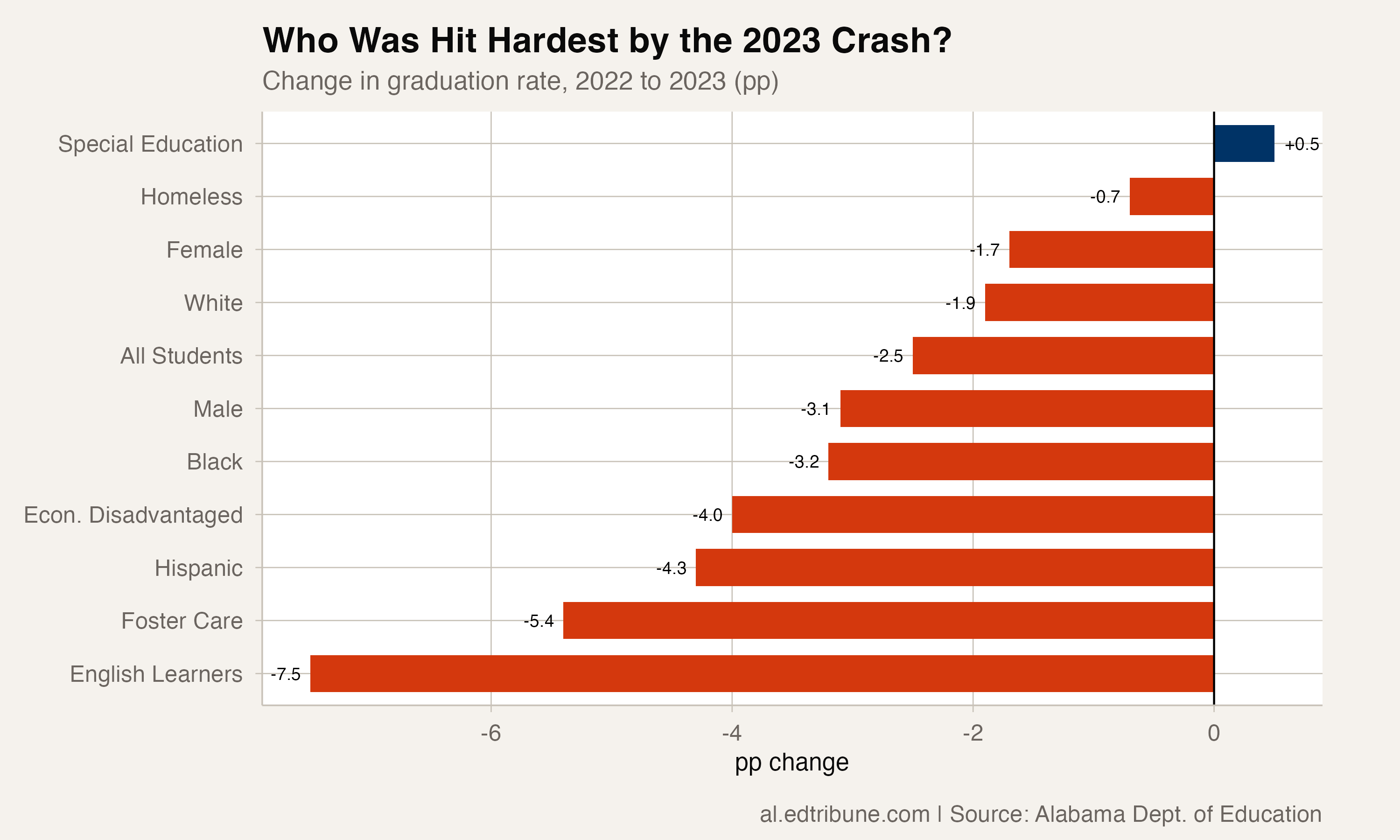
The crash was not distributed equally. English learners dropped 7.5 percentage points in a single year, the steepest decline of any group. Students in foster care fell 5.4 points. Native American students dropped 4.9 points. Hispanic students fell 4.3 points.
The groups hit hardest were, without exception, the same groups that had benefited most from COVID-era flexibility in attendance, grading, and credit recovery. When those policies expired, the students who needed them most saw their graduation prospects collapse.
Special education was the lone exception, improving half a point while everyone else fell. Students in special education operate under individualized graduation plans that are less affected by blanket policy changes.
The recovery was uneven
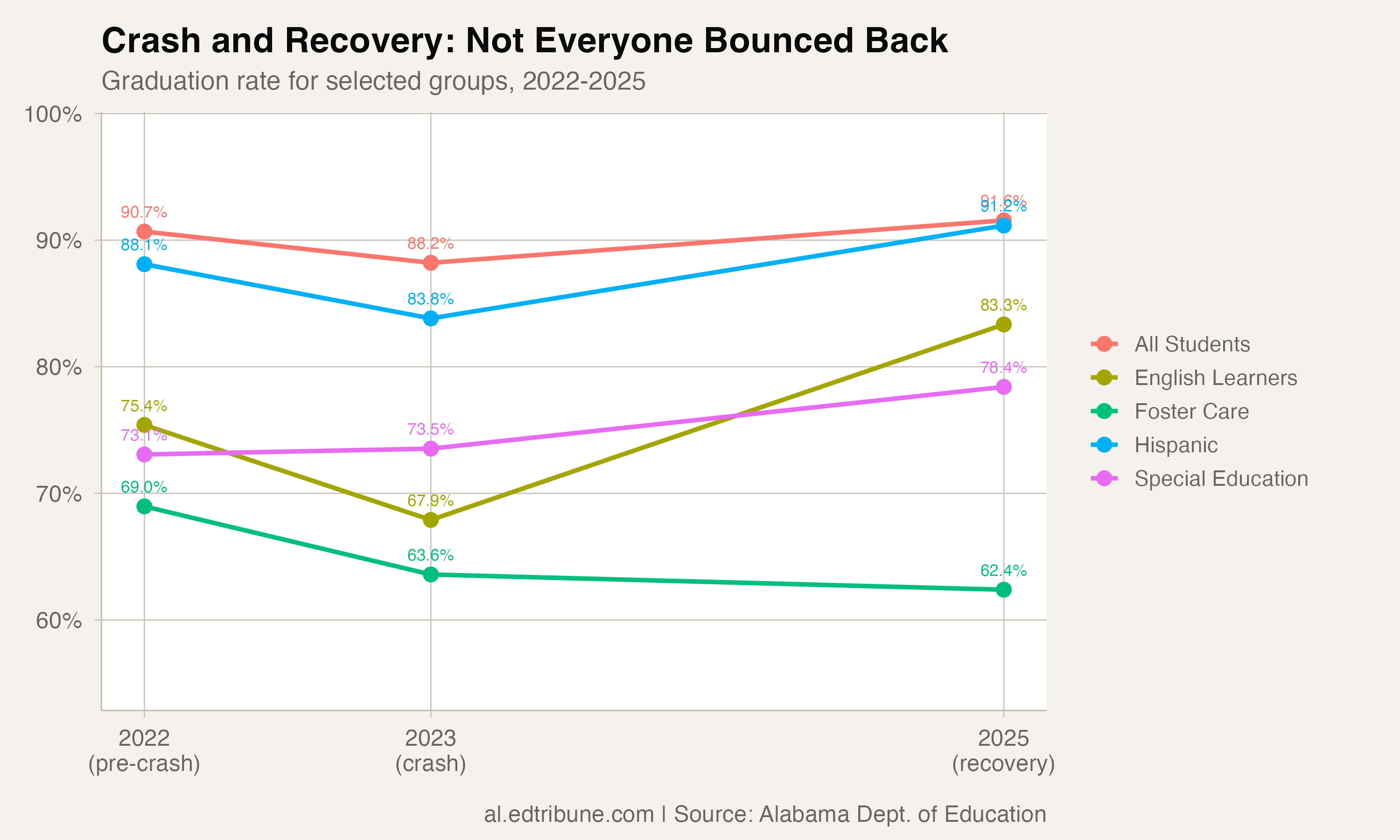
Not everyone bounced back. English learners surged 15.4 points over the next two years, a dramatic overcorrection that suggests the 2023 dip was partly a timing anomaly. The overall rate gained 3.4 points. Hispanic and economically disadvantaged students recovered their losses and set new records.
But students in foster care did not recover. Their rate continued to decline from 63.6 percent in 2023 to 62.4 percent in 2025. The 2023 drop was not a temporary setback for young people in foster care. It was another step down in a sustained downward trajectory.
The district picture
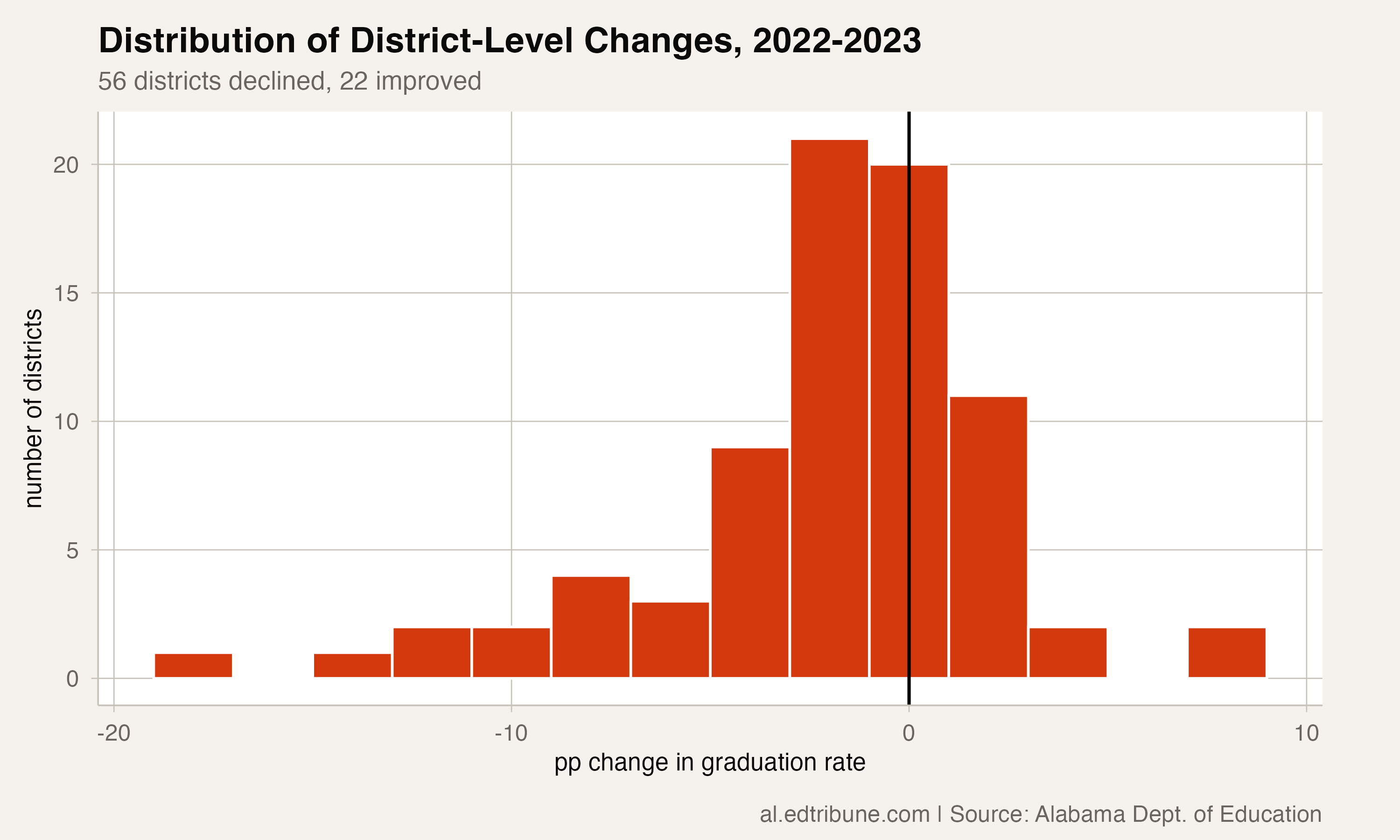
The crash was widespread but not universal. The majority of Alabama districts saw their rates decline in 2023, but some held steady or improved. The distribution of changes shows a clear downward pull: the median district change was negative, and the most extreme declines reached double digits.
Montgomery County's 17.1-point collapse was the most dramatic outlier, but dozens of districts experienced drops of 5 points or more.
What the crash tells us
The 2020-2022 graduation rates should be read with a footnote. Flexible attendance policies, expanded credit recovery options, and relaxed grading standards during the pandemic years pushed rates to levels that were not sustainable. When those policies normalized in 2023, the rates corrected.
This does not mean the improvement was entirely artificial. Alabama's 2025 rate of 91.56 percent exceeds every pre-COVID year, suggesting genuine underlying progress. But the 2020 peak of 91.71 percent was likely inflated by 1-2 percentage points of policy-driven gains that vanished the moment the policies did.
The 2023 crash was not a failure. It was a recalibration, and the fact that the state surpassed its pre-crash trajectory by 2025 suggests the underlying improvement trend is real.
By the numbers: 91.56%, Alabama's 2025 graduation rate, second-highest on record, after a 2.47pp dip in 2023 (the largest decline in a decade). Hardest hit: English learners (-7.5pp), students in foster care (-5.4pp).
Detailed code that reproduces the analysis and figures in this article is available exclusively to EdTribune subscribers.
Discussion
Sign in to join the discussion.
Loading comments...