Alabama Graduation Rates: Nine RecordsET · 2023 CrashET · Birmingham · Foster CareET · CCR GapET
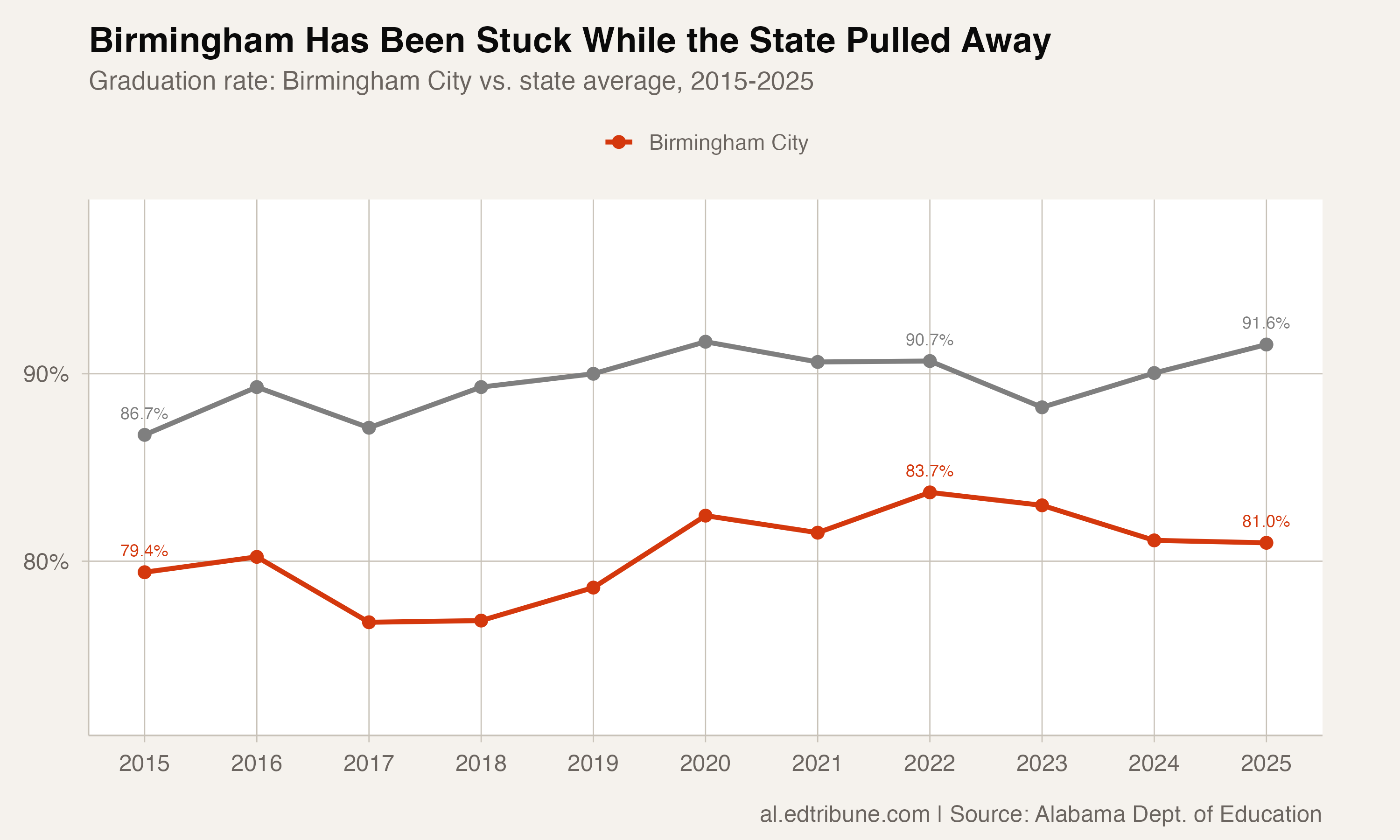
Birmingham City↗ET graduated 79.4 percent of its seniors in 2015. In 2025, the number is 81.0 percent.
A net gain of 1.6 percentage points over a decade in which the state improved by 4.8 points. Birmingham is not declining. It is stuck, treading water while the rest of Alabama swims past.
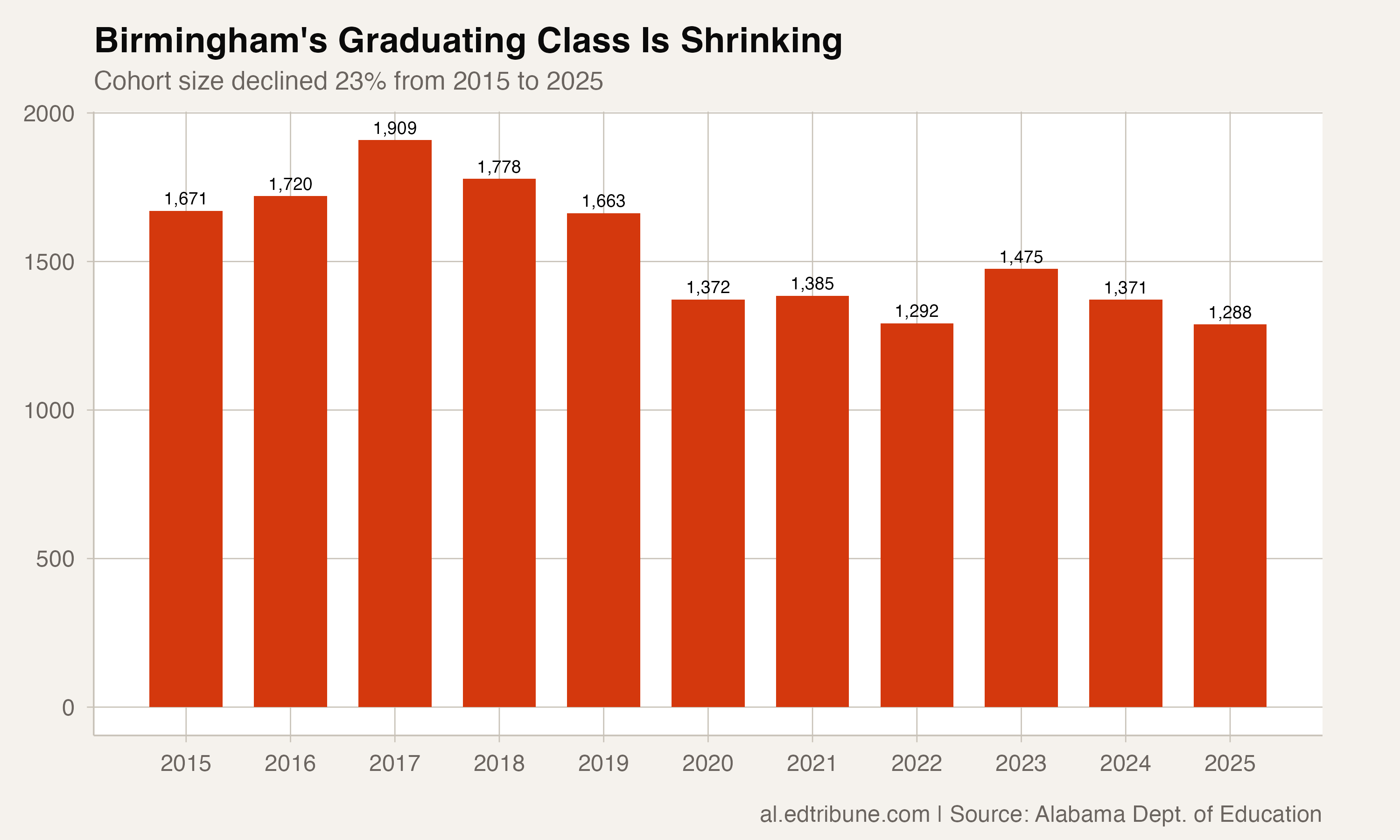
The state average now sits at 91.6 percent. Birmingham is 10.6 points below it, and the distance has widened. The city is also on a three-year decline streak: from 83.7 percent in 2022 to 83.0, then 81.1, then 81.0 in 2025. The gains of the late 2010s have been erased.
A decade of flatline
Birmingham's graduation rate has moved within a narrow band over the period covered by the data, dipping as low as 76.7 percent in 2017 and topping out at 83.7 percent in 2022, the COVID-era high that many districts hit. The rate has declined every year since 2022. The pre-COVID rate of around 80 percent appears to be the structural baseline, and the district has returned to it.
The 1.6-point net improvement over 11 years averages to 0.15 points per year. At that pace, Birmingham would need another 70 years to reach the current state average.
Compared to peer cities
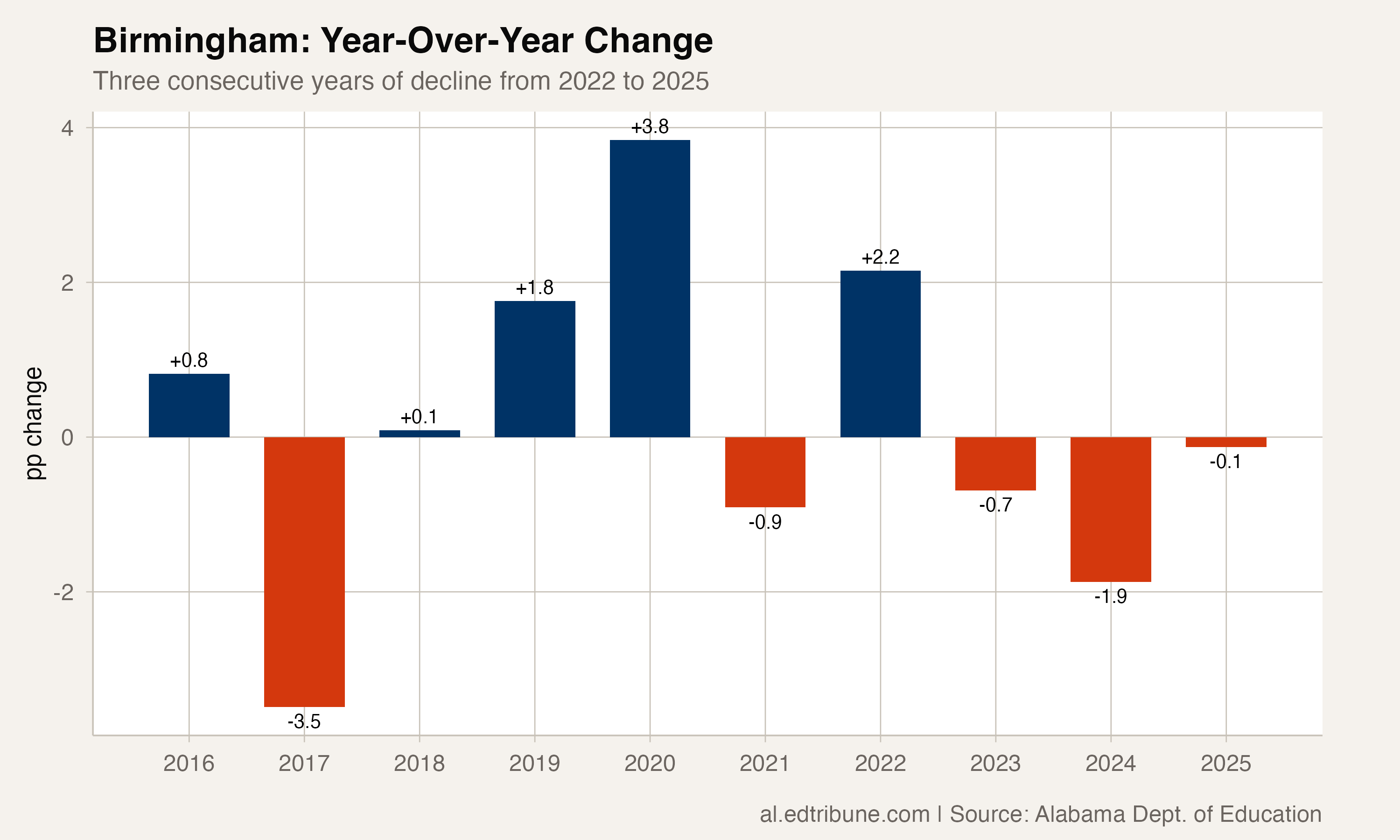
Among Alabama's five largest urban districts, Birmingham ranks fourth in 2025 graduation rate. Huntsville City leads at 94.5 percent. Tuscaloosa City sits at 89.6 percent. Mobile County, the largest district in the state, graduates 86.0 percent of its seniors. Montgomery County, despite its 2023 crash, has recovered to 80.4 percent, nearly matching Birmingham at the bottom of the peer set.
The comparison to Huntsville is particularly striking. Both are major urban districts with significant poverty and racial diversity. But Huntsville's rate has climbed steadily into the mid-90s, while Birmingham has stagnated more than 13 points behind.
The shrinking cohort
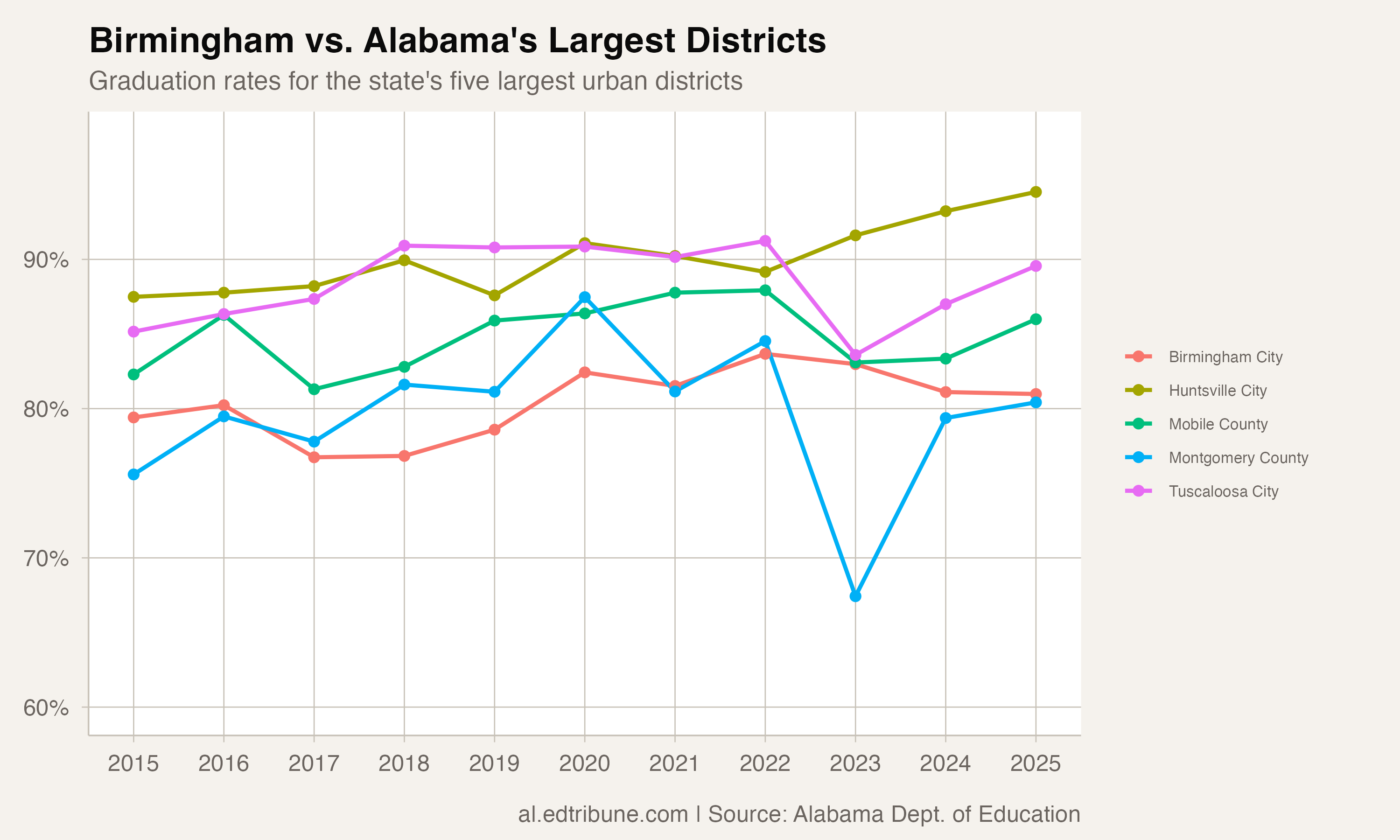
Birmingham's graduating class has shrunk by 23 percent over the decade, from 1,671 seniors in 2015 to 1,288 in 2025. The district is losing students at every level, a reflection of population decline and competition from suburban districts.
A shrinking cohort should, in theory, make improvement easier: fewer students means more resources per student, more individualized attention. That it has not translated into graduation gains suggests the challenges Birmingham faces are deeper than student-to-teacher ratios.
The subgroup view
No subgroup within Birmingham exceeds the statewide average. The district's overall rate of 81.0 percent sits well below the state mark across every category. The gap is a systemic issue, not a story of one group dragging the average down.
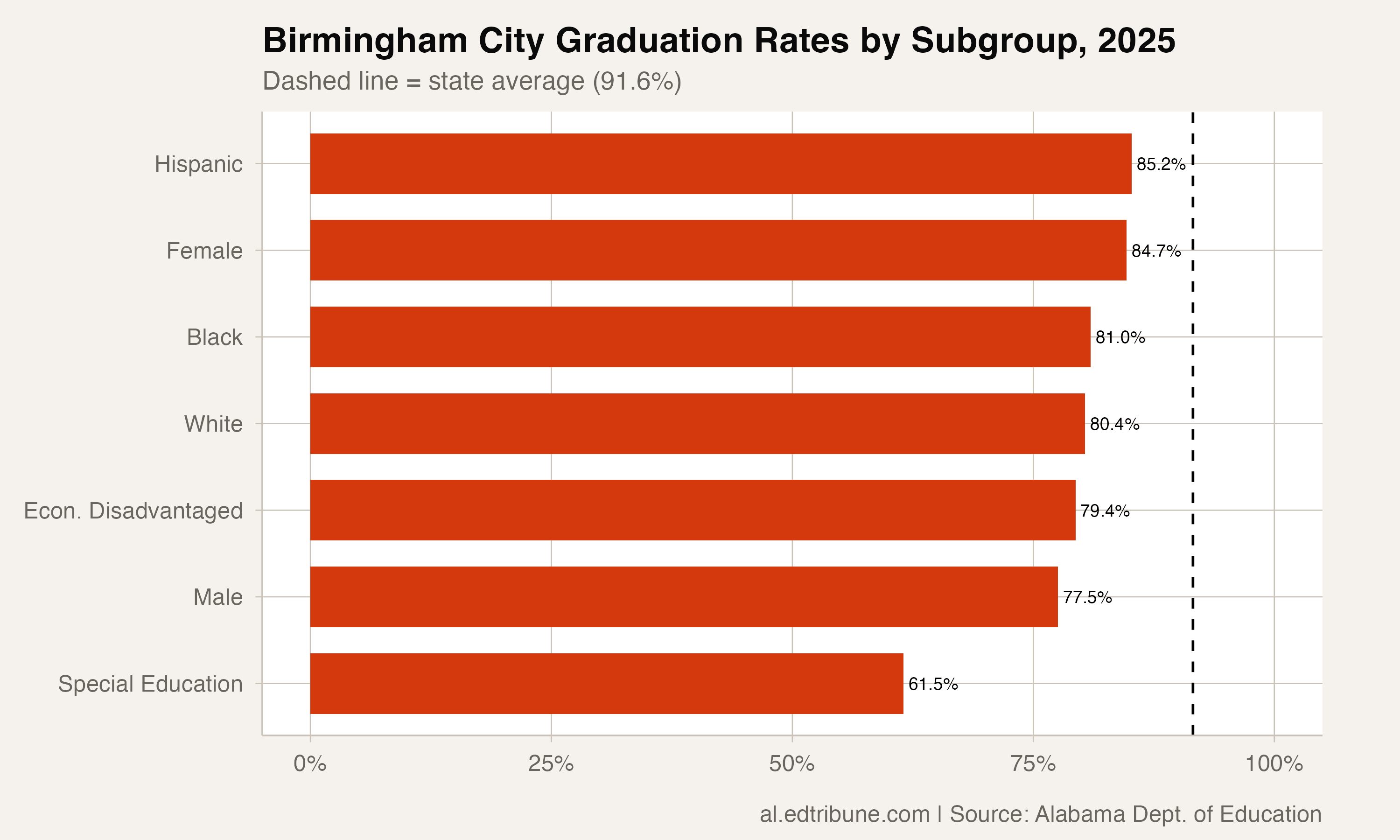
By the numbers: 81.0%, Birmingham City's 2025 graduation rate, up just 1.6 points from 79.4% in 2015. The state improved 4.8 points over the same period, widening the gap to 10.6 points.
Detailed code that reproduces the analysis and figures in this article is available exclusively to EdTribune subscribers.
Discussion
Sign in to join the discussion.
Loading comments...