Hispanic Students: From the Widest Gap in Years to Near-Parity in Two
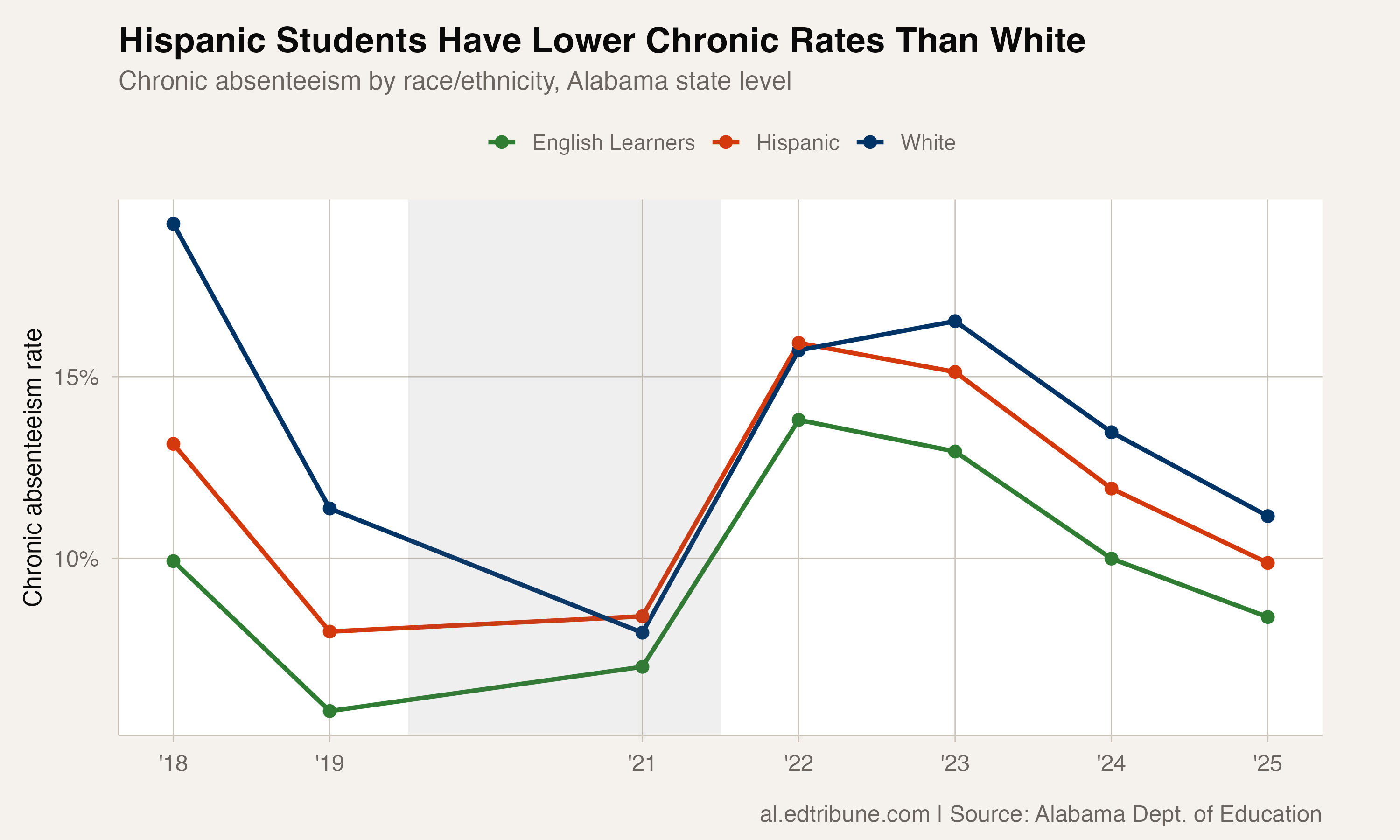
Alabama's white-Hispanic graduation gap swung from 0.9 points to 6.1 points and back to 1.8 points in a decade, extreme volatility with a good ending.
Yellowhammer State Education Coverage, Driven by Data
Education News & Data
Local education reporting from every corner of Alabama, grounded in Alabama Department of Education data.
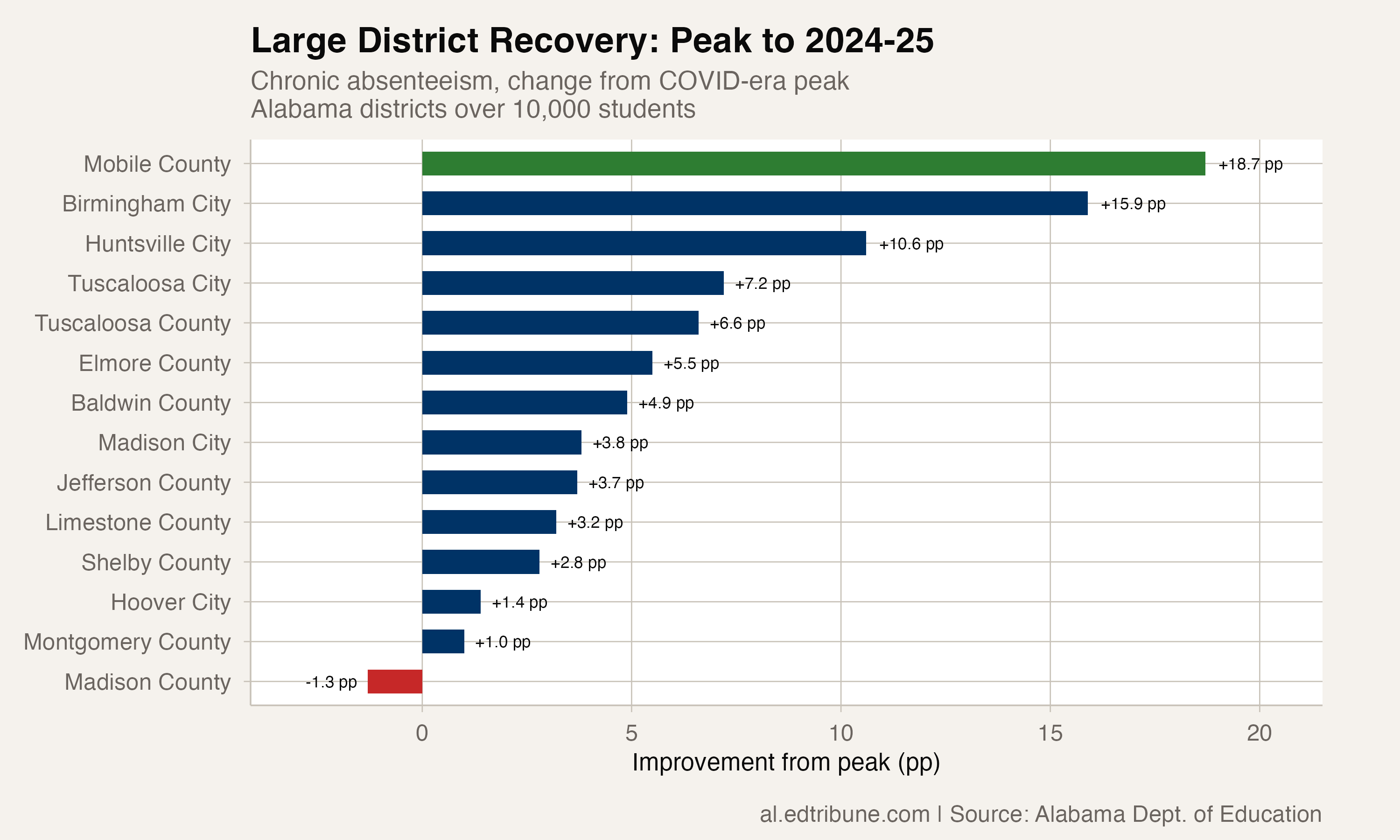
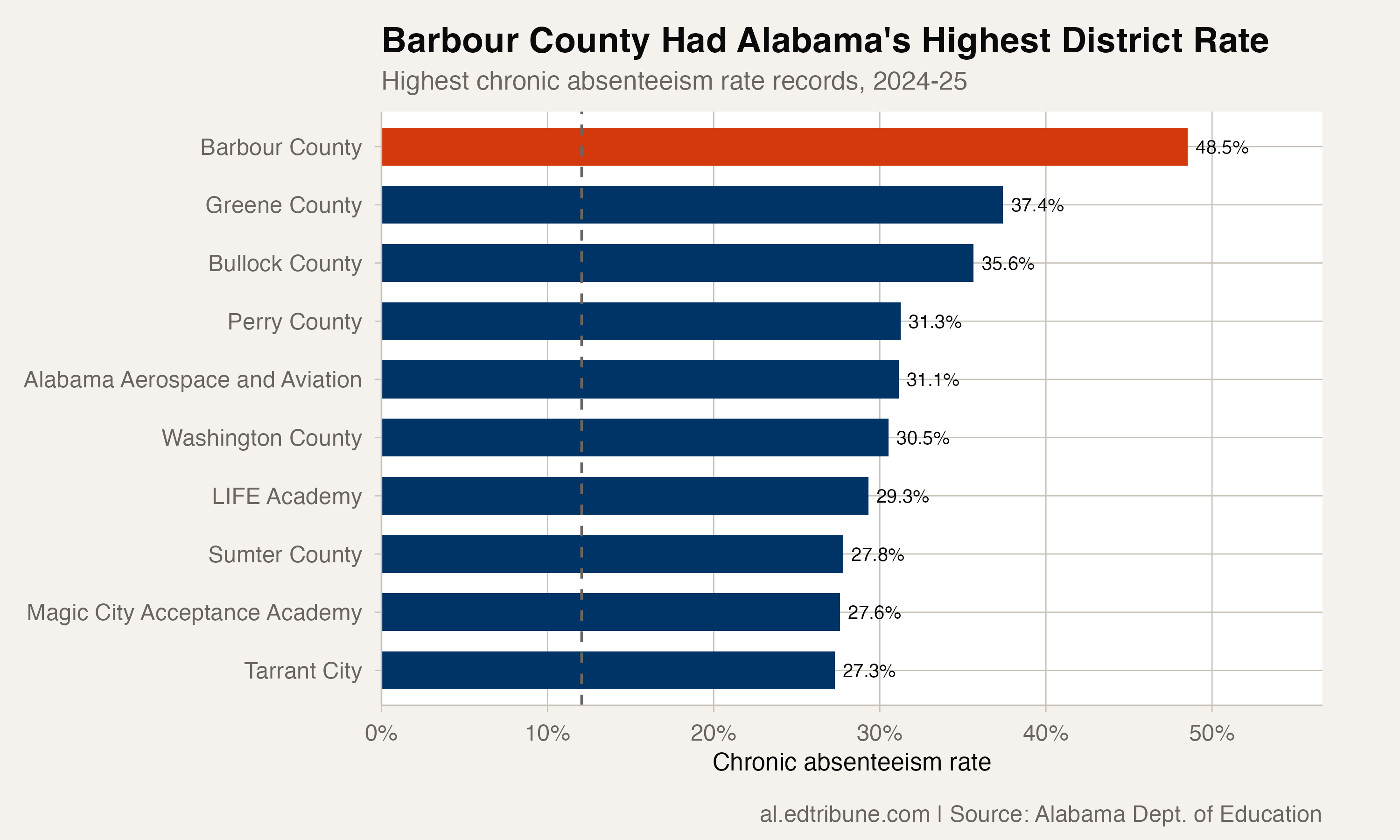
Across Alabama's 20 Black Belt counties, chronic absenteeism averages 22.4%, nearly double the state rate, with only three of 20 districts recovering to pre-COVID levels.
Dothan City Schools names Marketa George principal of Jerry Lee Faine Elementary, where she will lead a 285-student campus.
Dothan City Schools names Aundria L. Sewell principal of Beverlye Intermediate, where she will lead a 335-student campus.
Conecuh County's graduation rate rose 17 points in a decade, from well below to above the state average. A rare rural turnaround story.
Alabama's white-Hispanic graduation gap swung from 0.9 points to 6.1 points and back to 1.8 points in a decade, extreme volatility with a good ending.
The graduation rate for students who are currently homeless in Alabama reached 86.3% in 2025, the highest mark in the 2015-2025 state series.
One in five Alabama districts now has fewer than 1,000 students, up from one in 25 a decade ago. Black Belt legacy systems are nearing viability limits.
Alabama's Black Belt is splitting: Hale County's graduation rate rose 10 points while Sumter County's fell 17. A 27-point swing between neighbors.
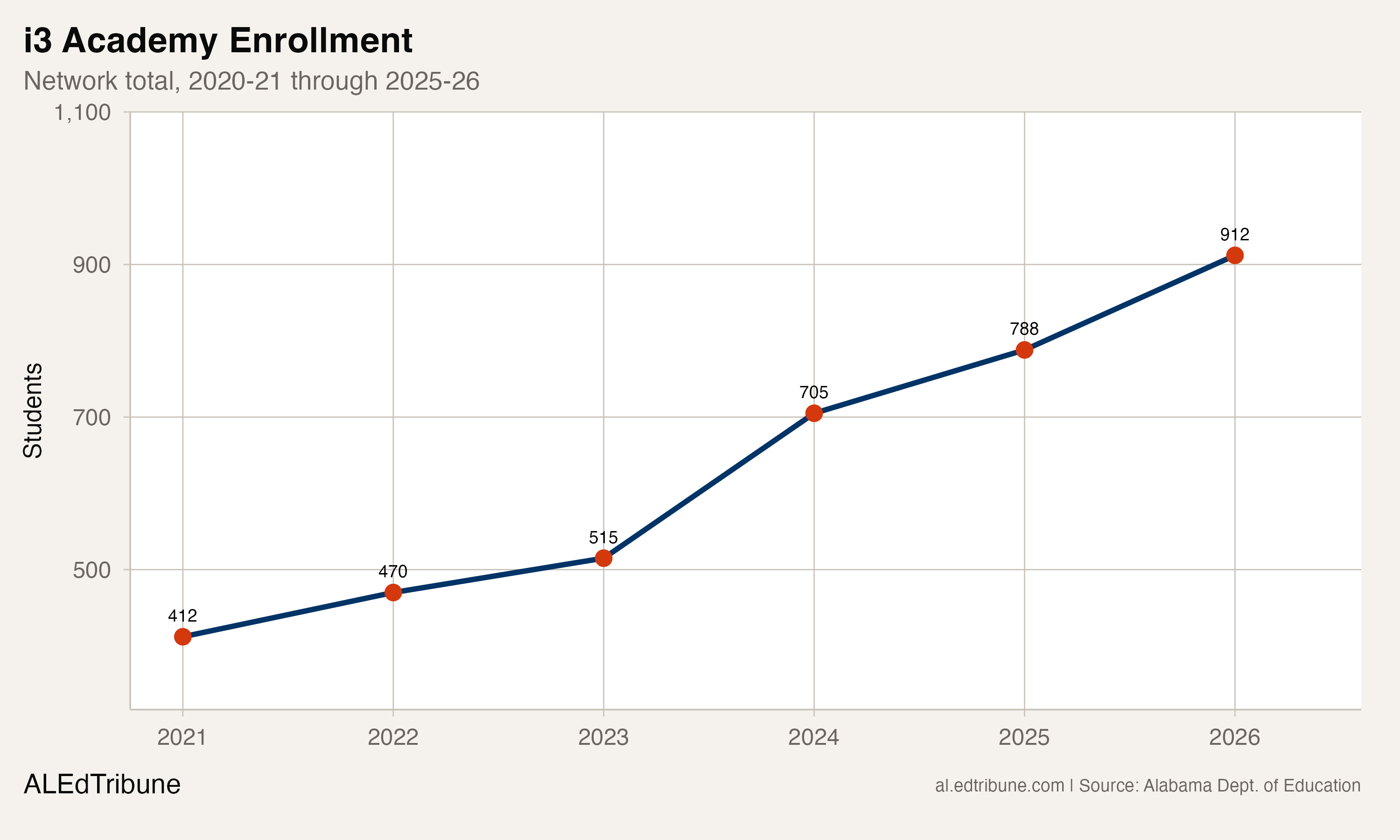
Alabama's three fastest-growing districts owe their growth to statewide virtual schools run by Pearson and Stride, not local enrollment gains.
The graduation rate for Alabama students who are English learners rose from 67.9% to 83.3% in two years, the fastest gain of any subgroup and an all-time high.
Fifty-one Alabama districts hit record-low enrollment in 2025-26, including the four largest. The decline spans urban, rural, and suburban systems.
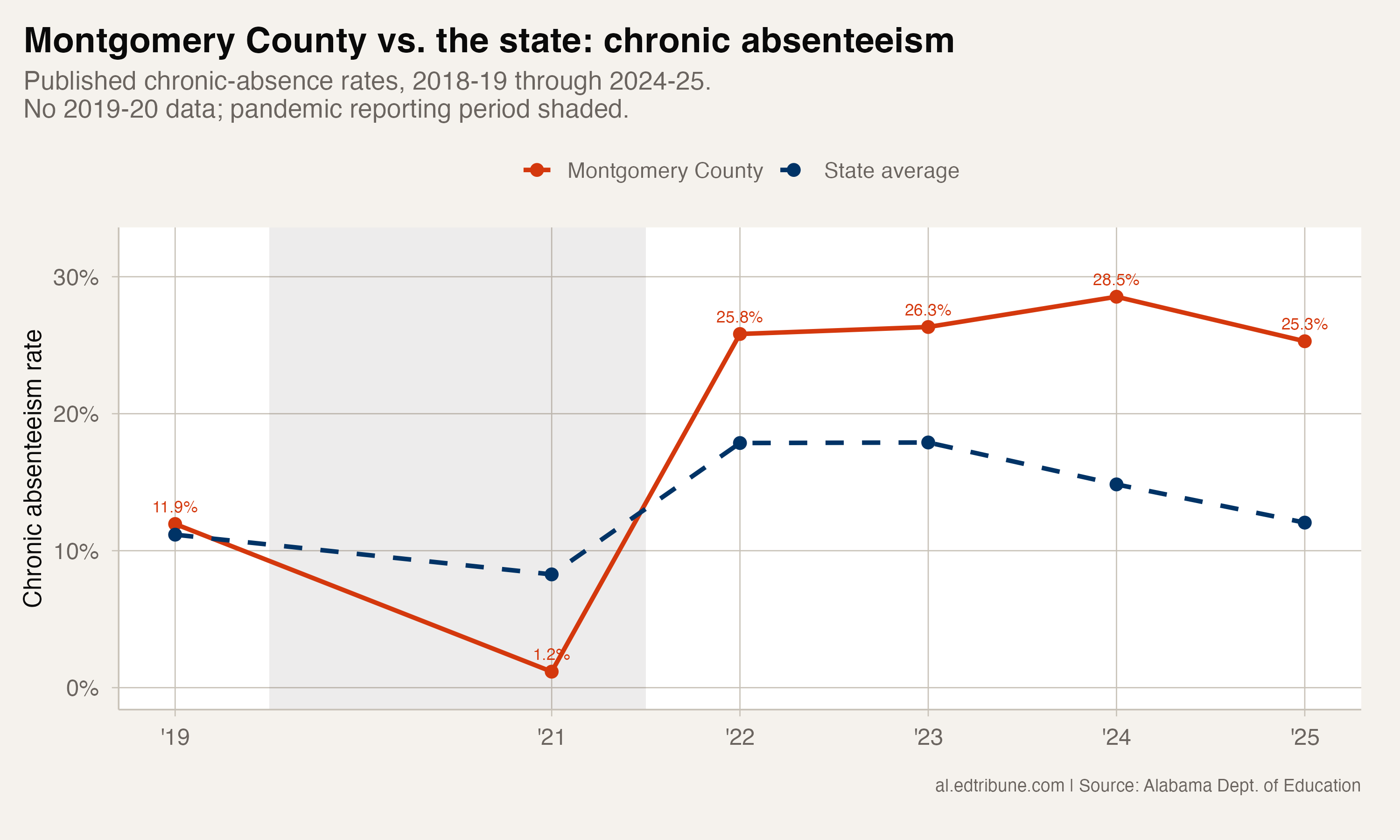
Montgomery County's graduation rate crashed 17 points in 2023, the largest single-year district drop in Alabama. Two years later, it has recovered only partially.
Alabama's English learner population has nearly quadrupled since 2015, from 13,793 to 51,068 students, reshaping classrooms from the poultry corridor to Birmingham.
Alabama's gap between graduation rate and college/career readiness collapsed from 49 points to 4 over a decade, one of the most dramatic diploma quality improvements in any state.
If pre-pandemic trends had held, Alabama would have 746,099 students. Instead it has 714,363, and the gap widens every year.