Correction: An earlier version misstated the 2020 special education graduation rate. It was 69.6 percent.
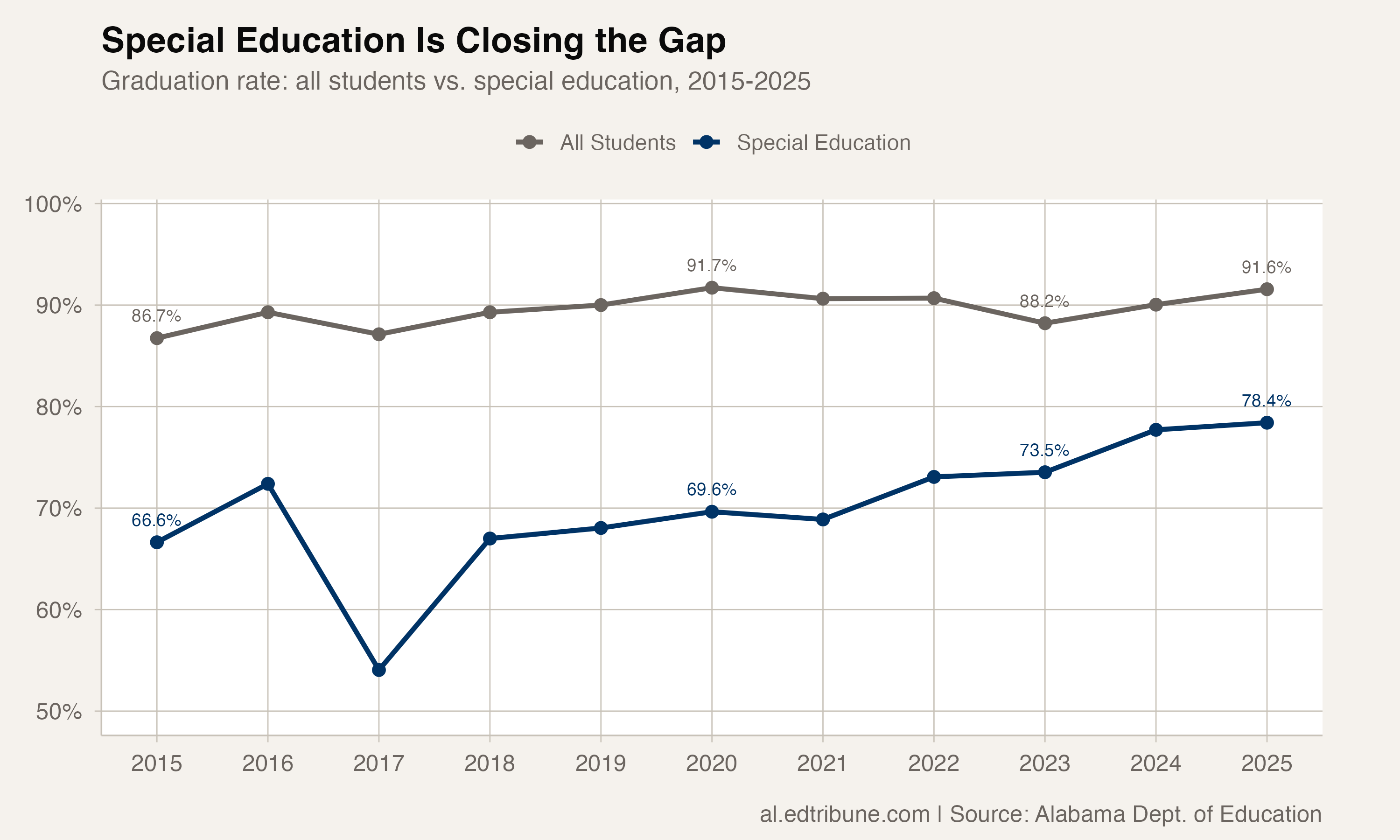
Alabama's special education graduation rate was 66.6 percent in 2015. One in three students with disabilities who started high school did not finish with their cohort.
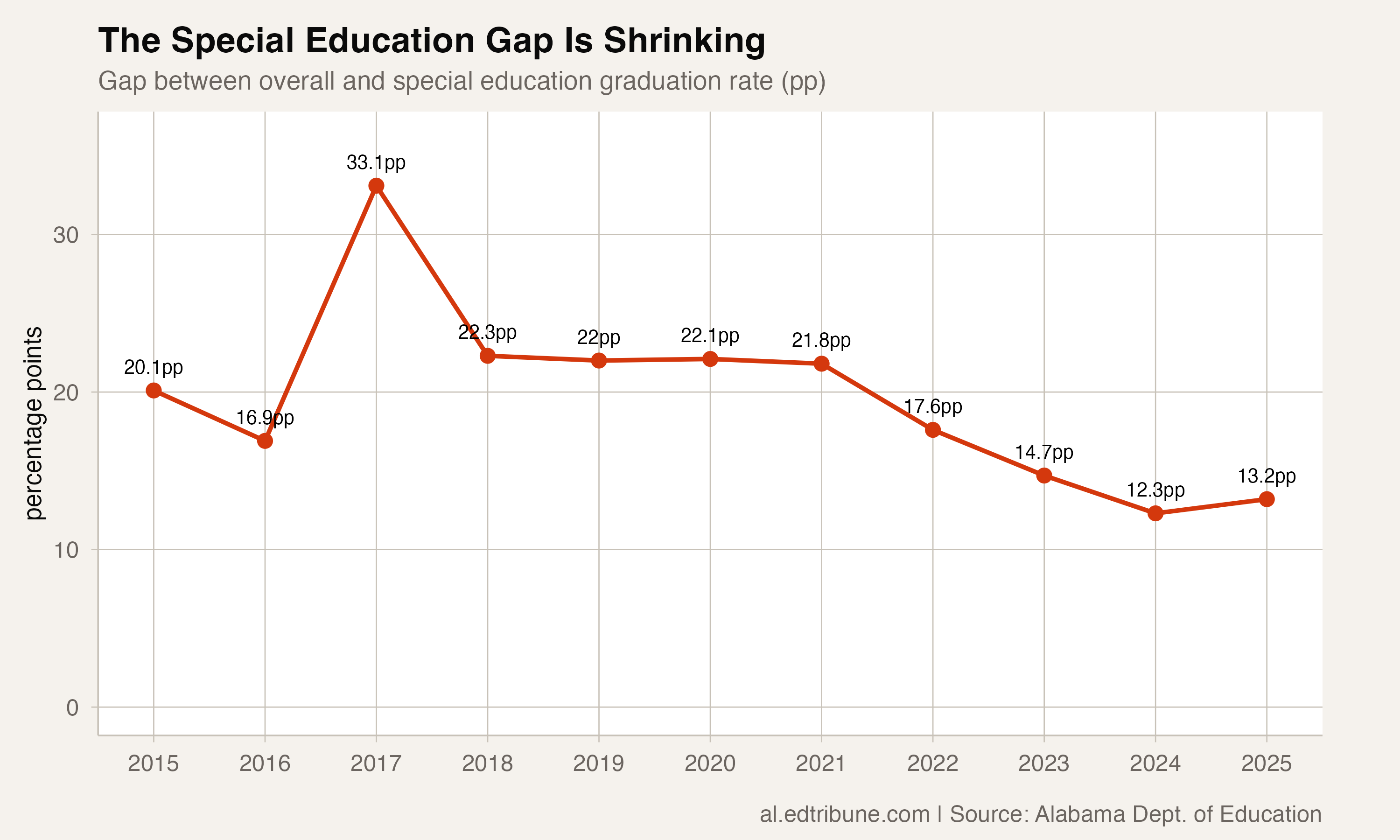
A decade later, the rate stands at 78.4 percent, the high for the data available from 2015 through 2025, and an 11.8 percentage point improvement that narrowed the gap with the overall graduation rate from 20.1 points to 13.2 points. The long-term change has been uneven. But the cumulative difference is real: 603 more special education students in the 2025 cohort graduated than would have at the 2015 rate.
The trajectory
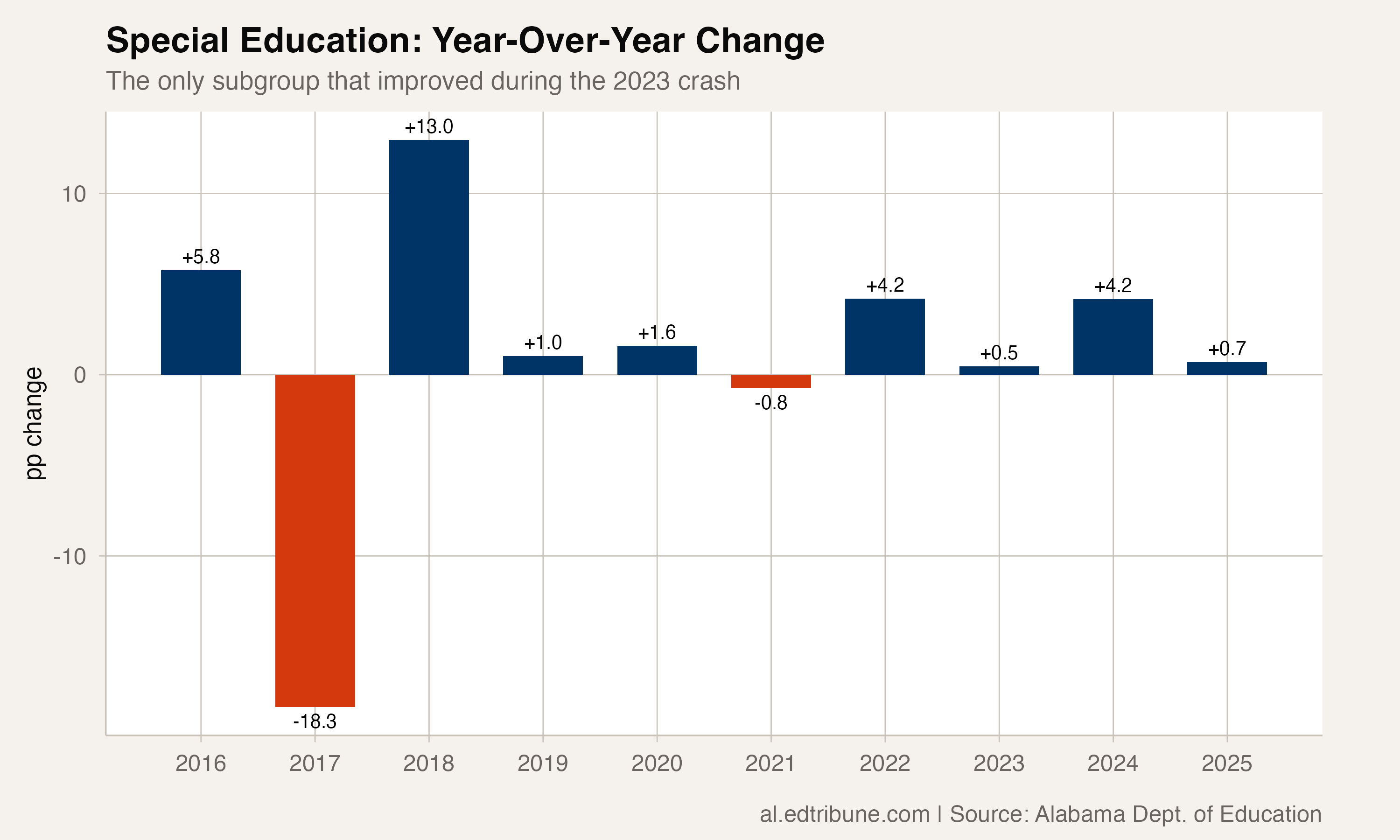
The year-to-year path was not linear. The rate rose from 66.6 percent in 2015 to 69.6 percent in 2020, fluctuated through the pandemic years, and then rose another 4.9 points from 2023 to 2025.
The gap with the overall rate narrowed from 20.1 points in 2015 to 13.2 points in 2025. That is still a meaningful distance: the four-year graduation rate for students in special education remained lower than the rate for all students.
The 2023 crash spared special education
When Alabama's statewide graduation rate dropped 2.5 percentage points in 2023, special education was the only subgroup with a reported rate that improved. The rate ticked up from 73.1 percent to 73.5 percent, a half-point gain while the state average fell.
Every other subgroup with a reported rate fell. English learners fell 7.5 points. Students in foster care dropped 5.4 points. The overall rate suffered its worst single-year decline in the available 2015-2025 data. Special education kept climbing.
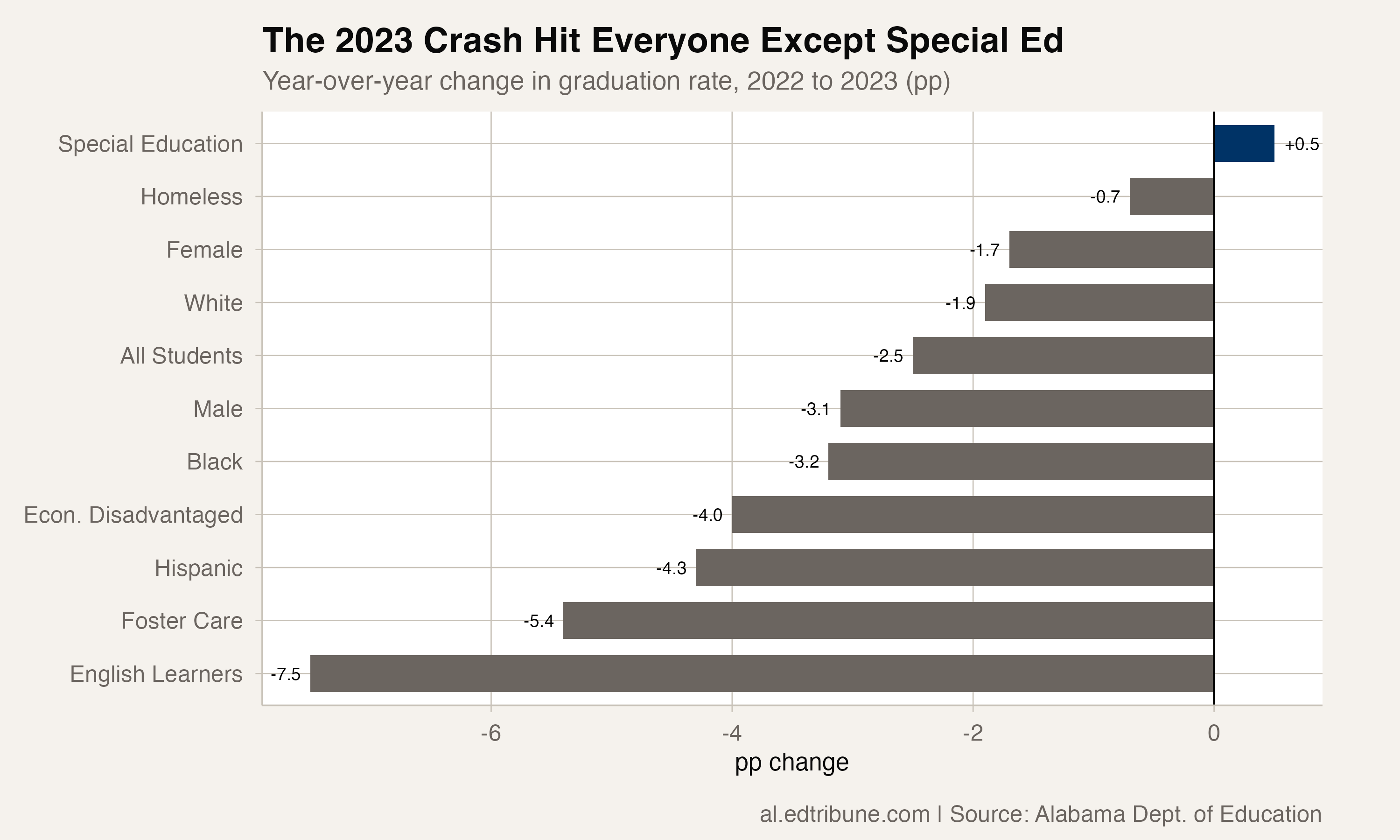
The data cannot say why special education avoided that one-year decline. It can only show that the subgroup moved differently from the statewide pattern at the moment when most other reported groups fell.
Cohort dynamics
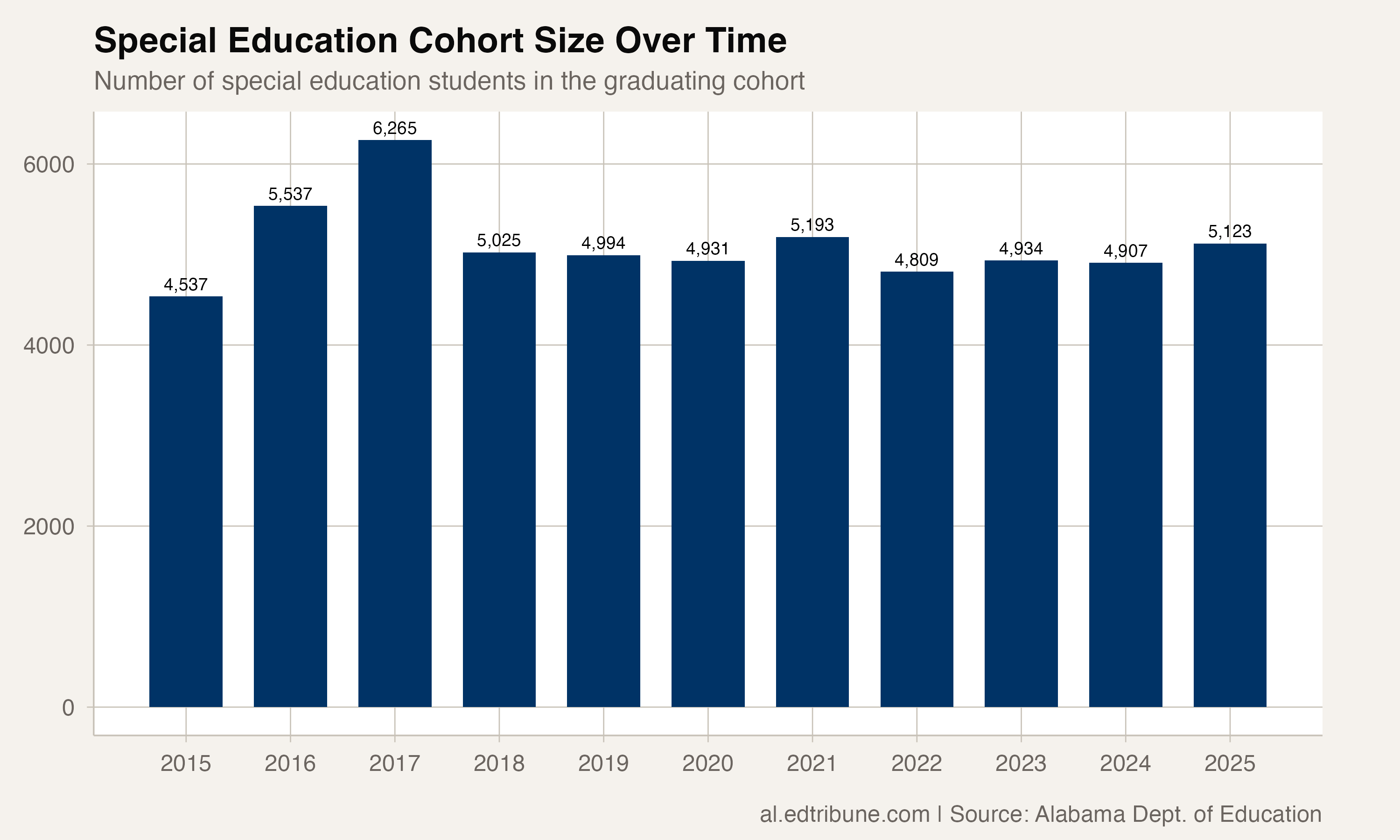
The improvement happened alongside shifting cohort sizes. The special education graduating cohort grew from 4,537 students in 2015 to 5,123 in 2025, so the higher rate did not result from a smaller 2025 denominator.
What the data can and cannot say
Graduation-rate data can verify the direction, size, and timing of the change. It cannot isolate whether the improvement came from course-completion supports, individualized planning, credit recovery, reporting practices, or a mix of factors. No public source reviewed for this article directly attributes Alabama's special education graduation improvement to a specific statewide intervention.
The remaining gap
At 78.4 percent, Alabama's special education graduation rate still means more than one in five students with disabilities did not earn a diploma with their four-year cohort. The four-year rate measures completion with that cohort.
The 13.2-point gap to the overall rate, while smaller than it was a decade ago, remains the second-largest subgroup gap after foster care. Progress is real. The distance left to travel is still substantial.
By the numbers: 78.4%, Alabama's special education graduation rate in 2025, up from 66.6% in 2015. The gap to the overall rate narrowed from 20.1 percentage points to 13.2 percentage points.
Detailed code that reproduces the analysis and figures in this article is available exclusively to EdTribune subscribers.
Discussion
Sign in to join the discussion.
Loading comments...